
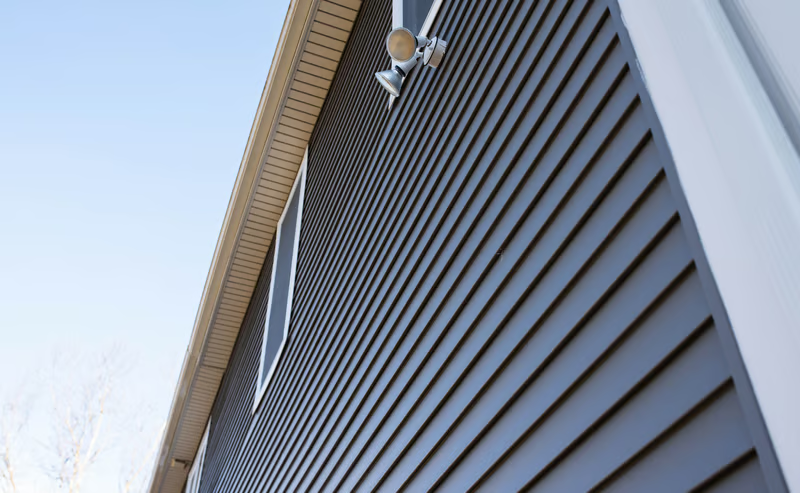
Siding replacement in Baton Rouge costs between $8,500 and $25,000 for a typical single-family home, with vinyl siding running $5 to $10 per square foot installed and fiber cement between $10 and $18 per square foot. East Baton Rouge Parish homeowners should budget 10 to 20 percent above the national average due to higher labor demand and hurricane-code compliance requirements. Big Easy Roofers provides free siding estimates across Baton Rouge, Denham Springs, Zachary, and surrounding East Baton Rouge Parish communities. Contact Big Easy Roofers for a free estimate and material comparison tailored to your home.
Replacing worn or damaged siding is one of the smartest investments a homeowner can make, especially in a region where humidity, severe storms, and termites take a relentless toll on exterior materials. At Big Easy Roofers, we help homeowners across Baton Rouge and East Baton Rouge Parish choose the right siding material at a price that fits their budget. This guide breaks down the real costs of siding replacement in the Baton Rouge market so you can plan your project with confidence.
In 2026, the average siding replacement cost in Baton Rouge ranges from $8,500 to $25,000 for a typical 1,500 to 2,000 square foot home. That range depends heavily on the material you select, the number of stories, and the condition of your existing exterior walls. Vinyl sits at the low end, while fiber cement and natural wood push toward the higher end of that range.

Most Baton Rouge homes have between 1,200 and 1,800 square feet of exterior wall surface that needs covering. Costs per square foot generally fall between $5.00 and $18.00 installed, depending on the material, though premium options like James Hardie fiber cement with custom color finishes can push past that ceiling. If your home requires old siding removal, structural repairs underneath, or extensive trim replacement, expect an additional $1,000 to $4,000 on top of the base estimate.
Getting an accurate quote starts with a professional inspection of your exterior walls. Our team provides comprehensive siding installation services that include a full assessment of your home’s current condition before any work begins.
Each siding material carries its own price tag, lifespan, and performance profile. The table below compares the four most common options installed on Baton Rouge homes in 2026.
| Material | Cost Per Sq Ft (Installed) | Total for 1,500 Sq Ft | Lifespan | Storm Rating |
|---|---|---|---|---|
| Vinyl | $4.50 – $8.50 | $6,750 – $12,750 | 20 – 30 years | Moderate (premium profiles higher) |
| Fiber Cement (Hardie) | $9.00 – $15.00 | $13,500 – $22,500 | 30 – 50 years | High (up to 200 mph) |
| Engineered Wood (LP SmartSide) | $6.00 – $12.00 | $9,000 – $18,000 | 25 – 40 years | Moderate to High |
| Natural Wood | $8.00 – $14.00 | $12,000 – $21,000 | 15 – 30 years (with maintenance) | Low to Moderate |
Fiber cement consistently ranks as the top recommendation for Baton Rouge homeowners. It resists rot, termites, and moisture while standing up to severe storm winds rated up to 200 mph. The upfront cost is higher than vinyl, but the extended lifespan and minimal maintenance requirements often make it the better long-term value. If you are weighing the differences between these materials, our guide to explore siding options for your Baton Rouge home covers the performance details for each one.
Labor accounts for roughly 40 to 60 percent of your total siding replacement cost. In the Baton Rouge market, professional installation labor runs between $2.75 and $6.00 per square foot for vinyl and $4.00 and $8.00 per square foot for fiber cement. Fiber cement installation requires specialized cutting tools and more precise fastening techniques, which is why its labor cost runs higher.

Several factors push labor costs up or down:
If you notice cracking, warping, or soft spots on your current exterior, addressing the problem early can prevent the kind of structural damage that inflates project costs. Our request a siding repair quote in Baton Rouge can handle targeted fixes when a full replacement is not yet necessary. Contact Big Easy Roofers for a no-obligation assessment before committing to a full project.
Baton Rouge presents a demanding environment for exterior building materials. Average annual humidity regularly exceeds 75 percent, annual rainfall tops 60 inches, and the Capital City sits within reach of Gulf hurricanes and severe thunderstorms that can produce damaging straight-line winds. Add the Formosan subterranean termite population, among the most aggressive in the state, and your siding material needs to check several boxes at once.
Humidity and moisture: The combination of intense summer heat and persistent moisture causes natural wood to swell, crack, and invite mold growth. Fiber cement and engineered wood resist moisture absorption far better than untreated lumber. Vinyl does not absorb water at all, though trapped moisture behind vinyl panels can damage the wall sheathing underneath if proper drainage gaps are not installed.
Storm wind resistance: Fiber cement rated for winds up to 200 mph is the gold standard for storm protection. Premium storm-rated vinyl with reinforced nail hems and advanced locking systems also performs well, though it cannot match fiber cement for impact resistance against flying debris. Natural wood performs poorly in high-wind events because individual boards can splinter and detach.
Termite resistance: Formosan termites can consume untreated wood at alarming rates across East Baton Rouge Parish. Fiber cement, vinyl, and metal are completely immune to termite damage. Engineered wood products like LP SmartSide incorporate zinc borate treatment that provides strong termite resistance, though they do not offer the same absolute immunity as inorganic materials.
For most Baton Rouge homeowners, fiber cement offers the strongest combination of humidity tolerance, storm resilience, and pest resistance available at a mid-range price point.
Baton Rouge neighborhoods vary widely in architectural style, lot size, and homeowner association requirements, all of which can influence your siding project. In established areas like the Garden District, Beauregard Town, and Capitol Heights, many homes feature traditional clapboard or wood lap siding that owners want to preserve or replicate. Fiber cement lap siding in a wood-grain finish is often the best solution, delivering the classic look with modern durability.
In newer subdivisions across the southern and southeastern parts of East Baton Rouge Parish, including neighborhoods near College Town and around Burbank Drive, builder-grade vinyl siding is common. Upgrading to insulated vinyl or fiber cement during a replacement project improves energy efficiency and curb appeal without running into HOA restrictions, since most associations in these areas approve both materials.
Homes closer to the Mississippi River or in low-lying areas near Bayou Manchac face elevated flood and moisture risk. For these properties, choosing a siding material that resists standing water contact and dries quickly after flooding is critical. Fiber cement and vinyl both outperform wood in post-flood recovery scenarios because they do not absorb water or support mold growth the way untreated lumber does.
For a standard 1,500 to 2,000 square foot home in Baton Rouge, a full exterior cladding replacement runs between $8,500 and $25,000 in 2026. Vinyl is the most affordable option starting around $4.50 per square foot installed, while fiber cement ranges from $9.00 to $15.00 per square foot. The final price depends on your chosen material, wall condition, and whether trim or soffit work is included.
Fiber cement boards are the top performer for Louisiana’s climate. They resist wind speeds up to 200 mph, do not absorb moisture, and are completely immune to termite damage. Engineered wood with zinc borate treatment is a solid mid-range alternative that also handles humidity well while costing less than fiber cement.
Yes. Tear-off and disposal of existing material typically adds $1.00 to $2.50 per square foot to the total. For a home with 1,500 square feet of wall surface, that means an additional $1,500 to $3,750. However, removing old panels lets your contractor inspect the sheathing and house wrap underneath, which can prevent costly moisture problems down the road. Big Easy Roofers inspects existing siding and underlying sheathing before recommending a replacement product.
Many HOAs in East Baton Rouge Parish have architectural guidelines that specify approved materials, colors, and profiles. Most associations accept fiber cement and premium vinyl without issue. Natural wood and engineered wood are also generally permitted. Contact your HOA board for a copy of the current exterior modification guidelines before committing to a material, since approval requirements vary by subdivision.
Most residential projects take one to three weeks from start to finish, depending on home size and material. Vinyl installs fastest because it is lightweight and uses simple fastening systems. Fiber cement takes longer due to specialized cutting and precision nailing requirements. If your HOA requires an architectural review, factor in an additional one to three weeks for approval before work begins.


 By Admin
  0 Comment
  May 26, 2026