
When a major hurricane targets the Gulf Coast, some roofs hold firm while others peel apart within minutes. The difference is rarely luck. It comes down to engineering decisions made long before the first rain band arrives. At Big Easy Roofers, we have seen firsthand how specific construction details determine whether a New Orleans home weathers the storm or ends up with tarps on the roof for months afterward.
New Orleans homeowners in Orleans Parish live with hurricane risk every season, yet many do not realize that a handful of structural upgrades can dramatically change outcomes. With much of the city’s historic housing stock dating back generations, from shotgun doubles in the Bywater to Craftsman bungalows in Lakeview, and low-lying elevations surrounded by Lake Pontchartrain, the Mississippi River, and an extensive levee system, the stakes are especially high. This guide breaks down exactly why some roofs survive Category 4 winds and others collapse under far less force.
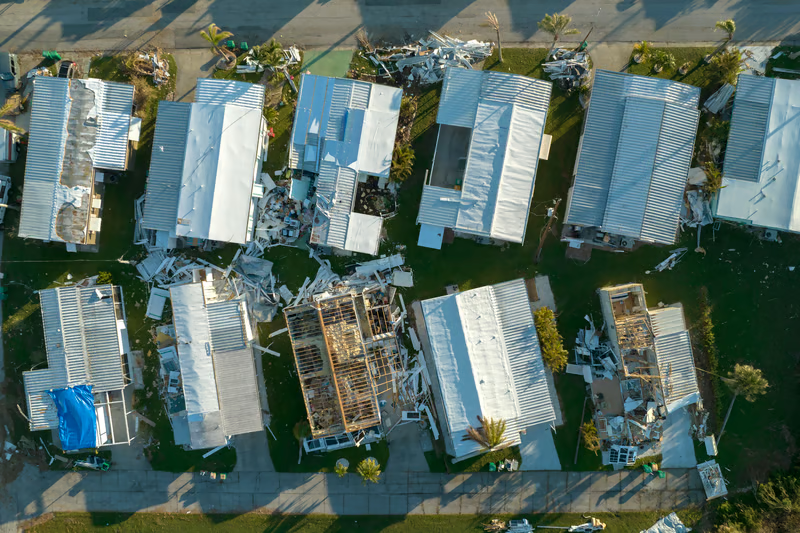
Roof failure during a hurricane is not one single event. It is a cascading sequence that typically begins at the most vulnerable points and spreads outward. Understanding these failure modes is the first step toward preventing them.

Wind uplift is the primary culprit. Hurricane-force winds create intense negative pressure on the roof surface, essentially trying to suck the roof upward off the house. Research from the Insurance Institute for Business and Home Safety (IBHS) shows that the highest uplift pressures concentrate at roof corners and edges. Aging asphalt shingles can begin dislodging at wind speeds as low as 60 mph, well below Category 1 thresholds.
Windborne debris impact is the second major failure mode. Once nearby structures begin shedding roofing materials, tree limbs, and loose objects, those projectiles strike surrounding homes at high velocity. A single puncture in the roof covering exposes the deck beneath and allows water to pour in. In New Orleans, where residential lots sit close together across neighborhoods like Lakeview, Gentilly, and the Lower Ninth Ward, debris from one damaged roof can quickly cascade into damage on neighboring homes.
Water intrusion causes the costliest damage of all. Once shingles lift or tear away, wind-driven rain forces water through gaps in the roof decking. Interior water damage, mold growth, and structural deterioration can cost tens of thousands of dollars. Homes that invest in proper start hurricane weatherproofing before the season are far less likely to experience catastrophic water intrusion even when shingles are lost.
The connection between your roof framing and your walls is the single most critical factor in whether a roof survives hurricane-force winds. A large portion of New Orleans’s housing stock was built long before Orleans Parish adopted modern wind-resistance codes, meaning many homes still rely on toe-nailed connections, where nails are driven at an angle through the rafter or truss into the top plate of the wall. This method creates a friction-dependent joint that can pull apart under sustained uplift forces.
Hurricane straps, also called hurricane ties, are galvanized steel connectors that mechanically fasten the roof structure to the wall framing. They wrap around the truss or rafter and anchor into the wall below, creating a continuous load path from the roof down to the foundation. Homes with hurricane straps can resist wind loads that would rip a toe-nailed roof clean off its walls.
Post-storm analysis consistently identifies framing connections as the weak link that causes a building to unravel during severe wind events. Properly installed toe-nails may hold the roof structure intact up to roughly 100 mph winds. Hurricane straps extend that threshold significantly and maintain structural integrity even under the powerful negative-pressure forces generated during a Category 4 storm. If your New Orleans home was built before current Orleans Parish building codes required these connectors, retrofitting hurricane straps during your next schedule a hurricane-resistant roof installation is one of the smartest investments you can make.
Not all roof geometries perform equally in high winds. Research published through Clemson Univ


 By Admin
 0 Comment
 Jun 23, 2026