
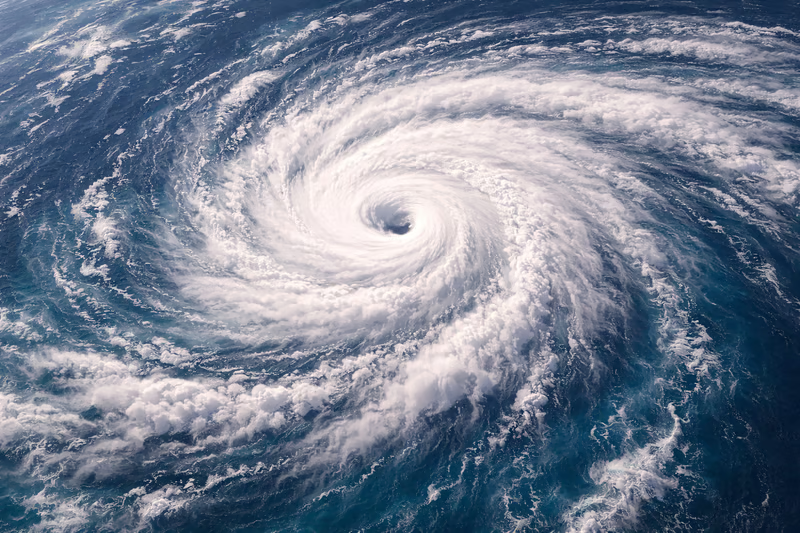
The 2026 Atlantic hurricane season begins June 1, and New Orleans homeowners should complete roof inspections, repair loose or missing shingles, clean gutters, and document their roof’s condition for insurance purposes before the first named storm forms. Colorado State University’s April 2026 forecast calls for 13 named storms and 6 hurricanes, with the northern Gulf Coast identified as a primary landfall risk zone. Big Easy Roofers is scheduling pre-season inspections now across the New Orleans metro, and availability fills quickly once tropical activity begins.
Every hurricane season reminds New Orleans homeowners of a hard truth: this city sits in one of the most storm-vulnerable locations in the United States. From Katrina in 2005 to Ida in 2021 and Francine in 2024, the Gulf Coast has absorbed devastating blows that left billions in property damage and hundreds of thousands without power. At Big Easy Roofers, we work with homeowners across southeast Louisiana communities like New Orleans who understand that preparation is the difference between a roof that holds and one that fails. The 2026 Atlantic hurricane season officially begins June 1, and the time to act on your roof is right now, not when the first tropical depression forms in the Gulf.
Colorado State University released its April 2026 outlook calling for 13 named storms, 6 hurricanes, and 2 major hurricanes (Category 3 or higher). CSU characterizes this as a “somewhat below-average” season, largely because a developing El Nino pattern is expected to increase wind shear across the tropical Atlantic. AccuWeather’s forecast is slightly wider, projecting 11 to 16 named storms, 4 to 7 hurricanes, and 2 to 4 major hurricanes, with 3 to 5 direct U.S. impacts. NOAA will release its official outlook in late May.

The phrase “below average” can be misleading. AccuWeather’s landfall risk analysis specifically identifies the northern and northeastern Gulf Coast as the zone most likely to take a direct tropical impact in 2026. That corridor stretches from the southeastern Louisiana coast through coastal Mississippi, Alabama, and into the Florida Panhandle. New Orleans sits squarely in this high-risk zone, a city built largely below sea level in Orleans Parish, protected by an extensive federal levee system that was overhauled after Katrina but still tested by every major storm. Forecasters also warn that warm sea-surface temperatures deep below the Gulf’s surface could fuel rapid intensification, where a tropical storm strengthens into a major hurricane within 24 hours. Hurricane Ida did exactly that in 2021, jumping from Category 1 to Category 4 in less than a day before slamming into Port Fourchon.
New Orleans occupies a uniquely exposed position within the Mississippi River delta, surrounded by water on nearly every side. Much of the city sits below sea level, with neighborhoods like Lakeview, Gentilly, and the Lower Ninth Ward depending entirely on the federal levee and floodwall system to hold back Lake Pontchartrain, the Mississippi River, and the Gulf Intracoastal Waterway. When hurricanes push storm surge northward through Lake Borgne and into Lake Pontchartrain, the enti


 By Admin
 0 Comment
 Jun 16, 2026