New Orleans receives over 64 inches of rain each year, making it one of the wettest cities in the United States. That volume of water puts enormous pressure on your gutter system, and when gutters fail, your roof pays the price. At Big Easy Roofers, we see gutter-related roof damage in homes across the metro area that could have been prevented with routine attention.
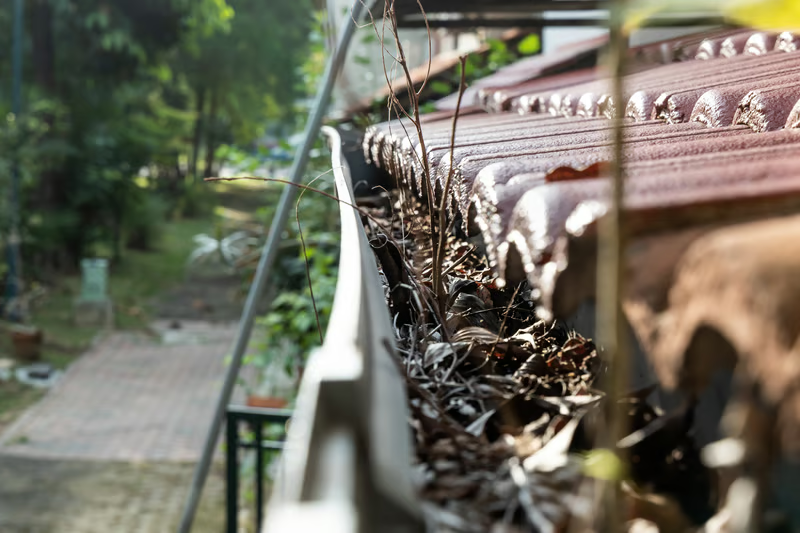
When gutters clog with leaves, live oak debris, and sediment, water has nowhere to go. Instead of flowing through downspouts and away from your home, it pools along the roofline and backs up under shingles. This standing water saturates the roof decking, softens the wood, and creates an entry point for moisture that leads to rot, mold growth, and structural weakening.
In New Orleans, where afternoon thunderstorms can drop two inches of rain in under an hour, a single clogged gutter run can send hundreds of gallons cascading over the edge. That overflow erodes landscaping, saturates foundation soil, and creates the kind of persistent dampness that attracts Formosan termites, a species that causes more structural damage in Louisiana than anywhere else in the country.
The fascia boards directly behind your gutters absorb the brunt of this moisture. Once fascia rots, gutter brackets lose their anchor points and the entire system begins to sag, compounding the drainage failure. If you notice any of these issues, a get a roof and gutter inspection in New Orleans can identify damage before it spreads.
Many homeowners miss the connection between gutter problems and roof deterioration. Watch for these warning signs:
Standard 5-inch K-style gutters were designed for regions with moderate rainfall. New Orleans averages 64 inches of rain annually, roughly double the national average, with intense tropical downpours that can overwhelm undersized systems in minutes.
For most homes in the metro area, 6-inch gutters paired with 3×4-inch rectangular downspouts provide the capacity needed to handle Louisiana’s peak rainfall rates. Homes with steep roof pitches or large roof surface areas may need even larger downspouts or additional outlet points to prevent overflow during heavy storms.
Proper gutter sizing is especially critical in neighborhoods across Orleans and Jefferson Parish, including Lakeview, Gentilly, and Mid-City, where the water table sits just a few feet below grade. Overflow that saturates the soil around your foundation can cause settling and structural movement, problems that cost far more to fix than a gutter upgrade.
Given the dense canopy of live oaks, magnolias, and crepe myrtles throughout New Orleans, most homes need gutter cleaning three to four times per year:
During each cleaning, inspect the gutter seams, end caps, and downspout connections for leaks. Check that all brackets are secure and that gutters maintain proper slope, roughly a quarter inch of drop per 10 feet of run toward each downspout. Keeping your gutter system functional is a key part of set up a routine roof maintenance plan that protects your entire home. Big Easy Roofers offers gutter inspection as part of an annual maintenance check for New Orleans and Jefferson Parish homeowners.
Gutter guards can reduce cleaning frequency, but not all types perform well in Louisiana’s environment. Micro-mesh screens handle fine debris and heavy rain flow the best, while solid-top reverse-curve styles can struggle during intense downpours when water sheets past the opening.
No guard system eliminates maintenance entirely. Live oak catkins, pine needles, and the fine dust common in New Orleans can still accumulate on top of guards, reducing water intake during storms. Plan on inspecting guards at least twice a year and clearing surface debris as needed.
Professional-grade micro-mesh guards with aluminum frames typically cost $15 to $30 per linear foot installed. For a home with 200 linear feet of gutters, that investment runs $3,000 to $6,000, but it can significantly extend the life of your fascia, soffit, and roof edge by keeping water flowing where it belongs.
Aluminum gutters in Louisiana typically last 20 to 30 years, but the combination of salt air, humidity, and storm debris can shorten that lifespan. Replace your gutters when you see:
When replacing gutters, upgrading to seamless aluminum in 6-inch width eliminates most joint-related leak points. Seamless gutters are formed on-site from a single piece of metal, which means fewer weak spots for Louisiana’s heavy rains to exploit. If your repair your soffit and fascia before the damage spreads show signs of rot, address those repairs before installing new gutters to ensure a solid mounting surface. Big Easy Roofers handles combined gutter, soffit, and fascia replacements across the New Orleans metro in a single visit.
When debris blocks water flow, rainwater pools along the roofline and seeps under shingles. This saturates the wooden decking beneath, leading to rot, mold growth, and weakened structural support. In a city that receives over 64 inches of rainfall annually, even a short period of blockage during a heavy storm can cause significant moisture intrusion.
Most homes in the metro need cleaning three to four times per year due to live oak debris, magnolia leaves, and frequent storm deposits. Schedule cleanings in late February, late May (before hurricane season), September or October, and December to stay ahead of seasonal buildup.
Six-inch K-style gutters with 3×4-inch rectangular downspouts are the standard recommendation for Southeast Louisiana. The region’s intense rainfall rates can overwhelm standard 5-inch systems, especially on homes with large or steep roof surfaces that concentrate water flow.
No guard system is maintenance-free. Micro-mesh screens perform best in Louisiana by handling fine debris and heavy flow simultaneously, but surface accumulation from catkins, pollen, and dust still requires periodic clearing. Guards reduce cleaning frequency from quarterly to roughly twice per year in most cases.
Insurers expect homeowners to maintain their property. If neglected gutters lead to water damage that could have been prevented, your claim may be reduced or denied under the policy’s maintenance exclusion. Documenting regular gutter upkeep through photos and receipts strengthens your position if you ever need to file a water damage claim. Big Easy Roofers provides service records that homeowners can use as documentation when filing claims.