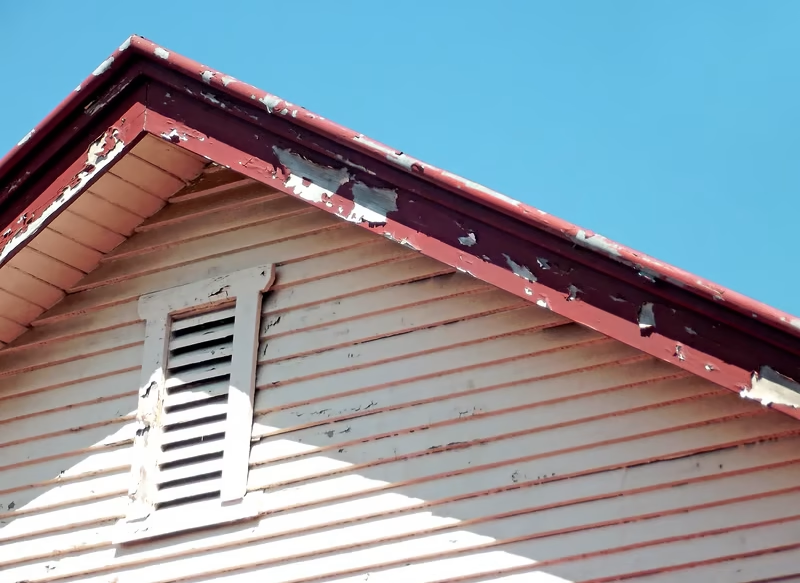
Wood rot in Louisiana’s soffit and fascia boards develops faster than in almost any other state because south Louisiana maintains humidity above 80 percent for roughly half the year, creating ideal conditions for fungal growth. Left untreated, rotted fascia pulls gutters away from the roofline and allows water to track directly into the attic and wall cavities. Big Easy Roofers inspects soffit and fascia condition on every roof job across the New Orleans metro and Northshore.
If you own a home in Mandeville, you already know that the Northshore’s relentless humidity takes a toll on everything from driveways to decks. What most homeowners overlook, though, is the damage happening right at their roofline. Wood rot in soffit and fascia boards is one of the most common and most costly problems facing Louisiana homeowners, and it often goes unnoticed until a full roof repair becomes unavoidable. At Big Easy Roofers, we see it on nearly every Northshore inspection we perform, and the pattern is almost always the same: moisture gets in, rot spreads quietly, and the damage compounds before anyone looks up.
Louisiana’s average relative humidity hovers between 70% and 80% year-round. That number matters because wood decay fungi become active once wood moisture content reaches approximately 20%, which corresponds to sustained ambient humidity above 80%. In south Louisiana, those conditions are not occasional, they are the baseline for roughly half the year.
Here is how the cycle works. Wood soffit and fascia boards absorb moisture from humid air, morning dew, and rain splash. In a drier climate, those boards would dry out between weather events. In Louisiana, the air itself holds so much moisture that the wood rarely gets a chance to fully dry. Over months, this repeated saturation breaks down the wood fibers from the inside. The surface may still look intact while the interior has already turned soft and spongy.
This process is especially aggressive on the north-facing sides of homes, under deep eave overhangs, and anywhere shade prevents direct sunlight from accelerating evaporation. Scheduling a professional schedule a wood rot and roof inspection is the most reliable way to catch decay before it spreads into structural framing.
Mandeville sits on the north shore of Lake Pontchartrain in St. Tammany Parish, and that geography creates a unique combination of moisture challenges. The lake generates persistent humidity and salt-tinged air that reaches homes throughout the area, particularly those closer to the waterfront along Lakeshore Drive and the Old Mandeville neighborhoods.
Beyond the lake, Mandeville is known for its lush canopy of live oaks, magnolias, cypress, and pines. That tree cover is part of the town’s character, but it also means extensive shade over rooflines. Shaded areas beneath Mandeville’s oak canopy stay damp longer, creating ideal conditions for mold, mildew, and wood rot. Leaves, pine needles, and other debris accumulate in gutters faster under heavy tree canopy, leading to water overflow that saturates fascia boards season after season.
St. Tammany Parish also receives approximately 64 inches of rainfall annually, well above the national average of around 38 inches. Combined with tropical storm activity and the Northshore’s subtropical conditions, Mandeville homes face more moisture exposure than most places in the country.
The trouble with wood rot is that it often develops out of sight. Here are the indicators Mandeville homeowners should watch for:
Soffit and fascia are not decorative trim. They serve critical structural and ventilation functions. Fascia boards seal off the exposed ends of your roof rafters from rain, wind, and pests. Soffit panels enclose the underside of the eave overhang and, when vented, allow fresh air to enter the attic.
When fascia deteriorates, gutters lose their anchor point and water begins reaching areas it was never meant to touch, rafter tails, roof decking edges, and wall sheathing. When soffit panels rot or warp, attic ventilation is restricted. Blocked soffit vents trap heat and humidity in the attic, causing condensation on cooler surfaces. That condensation dampens insulation and roof sheathing, creating interior rot conditions that mimic a roof leak.
Left unaddressed, what started as a few soft spots on a fascia board can escalate into damaged rafters, compromised roof decking, and mold growth inside the attic. Investing in regular set up a roof maintenance plan before rot spreads prevents these small problems from becoming large structural failures.
Louisiana is home to the Formosan subterranean termite, the most aggressive termite species in the United States. Formosan termites cause an estimated $500 million in damage across Louisiana each year, with roughly $300 million of that concentrated in the greater New Orleans metro area, which includes St. Tammany Parish and Mandeville.
Formosan termites are drawn to moisture-damaged wood. A fascia board that has begun to soften from rot becomes a target. These termites hollow out wood along the grain, leaving a paper-thin surface that may look blistered or peeled. A board that sounds hollow when tapped is a strong indicator of termite activity. Because Formosan colonies can contain millions of individuals, significant structural damage can occur within just a few years once an infestation takes hold.
The takeaway: wood rot and termite damage are not separate problems in Louisiana. Rot invites termites, and termites accelerate destruction. Addressing moisture issues in soffit and fascia is also a frontline termite prevention measure.
Many older Mandeville homes were built with wood soffit and fascia because it was affordable, easy to install, and attractive. In a Louisiana climate, however, Big Easy Roofers frequently sees wood requires constant upkeep, painting, sealing, and inspection every one to two years, to resist moisture. Without that maintenance, wood trim in this region typically needs repair or full replacement within 10 to 15 years.
Aluminum soffit and fascia offer a practical alternative for humid and coastal areas. Aluminum will not rot, warp, or split from moisture exposure. It resists corrosion, holds up against salt air near Lake Pontchartrain, and requires minimal maintenance beyond occasional cleaning. With proper installation, aluminum trim can last 20 years or more.
Vinyl is another option, though it can become brittle in extreme heat and may not hold up as well as aluminum under the UV exposure and temperature swings common on the Northshore. For Mandeville homeowners weighing long-term durability against upfront cost, aluminum generally provides the best return. Our team can evaluate your current trim condition and recommend the right material during a request soffit and fascia repair today consultation.
Costs vary depending on the extent of damage, material choice, accessibility, and linear footage involved. Based on current 2026 data, here are general ranges Louisiana homeowners can expect:
Labor typically runs $2 to $7 per linear foot depending on material and complexity. In Louisiana, additional factors like 6-inch or 7-inch gutter profiles (common due to Gulf storm rainfall intensity), extra downspouts, and tighter hidden-hanger spacing can affect total project cost.
Big Easy Roofers advises that delaying repairs almost always increases the final bill. A $600 fascia board replacement today can turn into a $5,000-plus project involving rafter repair, decking replacement, and mold remediation if the damage is allowed to spread.
Preventing wood rot in soffit and fascia comes down to controlling moisture and catching problems early. Here are practical steps for Northshore homeowners:
Press a screwdriver or awl into the surface of the board. Healthy wood resists pressure, while decayed wood will feel soft, crumbly, or spongy. Also look for paint that bubbles or separates, dark staining, and any areas where the board appears to sag or bow. A musty odor near upper-level rooms can also indicate concealed moisture damage behind the panels.
Yes. Fascia boards protect the exposed ends of roof rafters and provide the mounting surface for your gutter system. When fascia deteriorates, rain can reach the rafter tails, decking edges, and wall sheathing. Gutters may also pull away, causing water to cascade down the exterior wall. Over time, this can lead to interior water damage and compromised framing.
Mandeville sits along Lake Pontchartrain in St. Tammany Parish, where salt air and persistent moisture from the lake combine with the area’s dense canopy of live oaks and pines. The heavy shade keeps roofline components damp for extended periods, while above-average annual rainfall (around 64 inches) and subtropical humidity create conditions where wood rarely dries out completely between storms.
For homes on the Northshore, aluminum is generally the better long-term investment. It resists moisture, will not decay, holds up against salt air, and requires very little upkeep. Wood offers a traditional look but demands repainting and sealing every few years. Without consistent maintenance, wood trim in this region typically fails within 10 to 15 years.
The average project runs about $2,500, though costs range from roughly $900 to $6,800 depending on the linear footage, material selected, and extent of underlying damage. Aluminum costs more upfront than wood but saves money over time by eliminating repeated repair and repainting cycles. If rafter or decking damage has occurred behind the trim, the total will be higher.