Clay vs Concrete Roof Tiles Mandeville | Big Easy Roofers
FREE Roofing Estimates
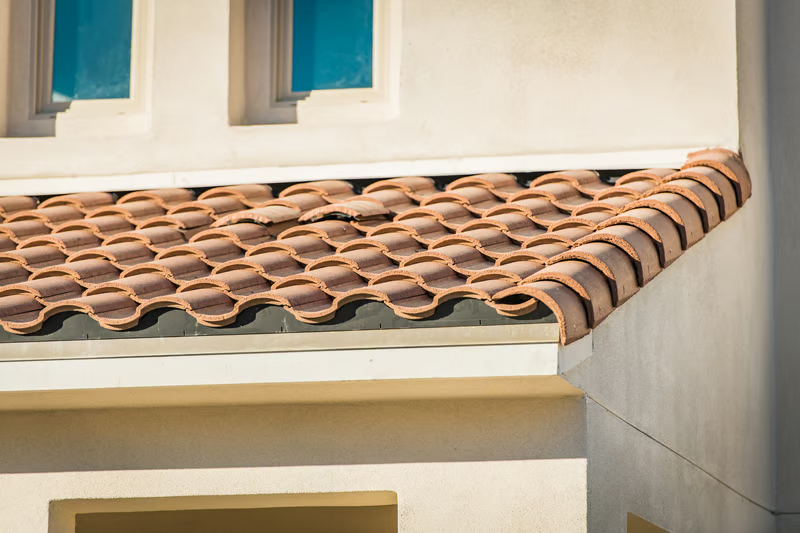
Clay tile roof southern home exterior

Clay vs Concrete Roof Tiles: Which Is Right for Your Mandeville Home?

For most Mandeville homes, clay tiles offer superior longevity, lasting 50 to 100 years, but cost $12 to $25 per square foot installed, while concrete tiles run $8 to $18 per square foot with a 30 to 50 year lifespan. Clay performs better in Louisiana’s salt air and humidity long-term, but both require structural reinforcement due to their weight. Big Easy Roofers evaluates your roof structure and budget before recommending either option across St. Tammany Parish.

Choosing between clay and concrete roof tiles is one of the most important decisions a Mandeville homeowner can make. Both materials deliver the timeless Southern aesthetic that defines the Northshore’s charming residential neighborhoods, but they perform very differently under Louisiana’s punishing heat, humidity, and hurricane-season winds. At Big Easy Roofers, we help property owners across Mandeville and St. Tammany Parish evaluate every factor, cost, weight, durability, and local building requirements, so the right tile ends up on the right roof.

Clay and Concrete Tiles at a Glance

Clay tiles have protected rooftops for centuries. Formed from natural clay and kiln-fired at over 2,000 degrees Fahrenheit, they develop a hard, dense surface that resists moisture and holds its color for decades. Concrete tiles arrived in the mid-20th century as a more affordable alternative. They are made from a mixture of Portland cement, sand, and water, then cured under controlled conditions. Both options come in flat, barrel (S-shaped), and interlocking profiles that complement the architectural character found throughout Mandeville’s established neighborhoods and along Lakeshore Drive.

Concrete roof tiles installation close up

Understanding the different types of tile roofing available in the greater New Orleans metro is the first step toward making a confident investment. The sections below break down exactly how clay and concrete stack up in the categories that matter most to Louisiana homeowners.

Side-by-Side Comparison Table

Specification Clay Tiles Concrete Tiles
Installed Cost (per sq ft) $12 to $25 $8 to $18
Material Cost (per sq ft) $3 to $18 $3 to $5
Expected Lifespan 50, 100+ years 30, 50+ years
Weight (per sq ft) 8, 10 lbs 9, 12 lbs
Water Absorption Rate ~6% ~13%
Wind Resistance Up to 150 mph Up to 180 mph
Color Retention Permanent (kiln-fired) Fades over time; may need recoating
Maintenance Level Low Moderate

Performance in the Mandeville Climate

Mandeville and the Northshore share the same subtropical climate as the greater New Orleans metro, averaging roughly 64 inches of rain per year with summer heat indexes that regularly exceed 110 degrees Fahrenheit. That combination of moisture and heat puts roofing materials under constant stress. Water absorption is where the two tiles diverge the most: clay absorbs approximately 6 percent of its weight in moisture, while concrete absorbs roughly 13 percent. In an area where afternoon thunderstorms are practically a daily occurrence from June through September, that difference matters.

Tile roof louisiana neighborhood aerial view

Lower absorption means clay tiles dry faster, resist mildew and algae growth more effectively, and are less likely to develop the dark staining that plagues concrete roofs across the Gulf Coast. Concrete tiles can be sealed or painted with protective coatings to slow moisture uptake, but those coatings add ongoing maintenance costs and need to be reapplied every few years.

From an energy standpoint, clay tiles provide a slight edge. Their porous internal structure promotes natural air circulation beneath the tile surface, helping reduce attic temperatures. In a market where air conditioning accounts for a significant share of utility bills, that passive cooling benefit translates to real savings. Homeowners who want to learn more about how tile performs over time should review the explore the advantages of tile roofing in Mandeville.

Wind and Hurricane Resistance

Hurricane preparedness is non-negotiable in southeastern Louisiana. Mandeville sits on the north shore of Lake Pontchartrain, and Northshore communities face significant wind exposure during major storms. Both clay and concrete tiles deliver strong wind resistance when properly installed. Clay tiles are generally rated to withstand sustained winds of 130 to 150 mph, while certain concrete tile systems have passed testing at up to 180 mph under Miami-Dade High Velocity Hurricane Zone standards.

However, the tile itself is only part of the equation. Underlayment quality, fastener spacing, and adhesive application determine whether a tile roof survives a major storm. Improper underlayment is the leading cause of tile roof failure during hurricanes. A professional schedule your tile roof installation in Mandeville that follows current Louisiana building codes ensures mechanical fastening at every tile and a secondary water barrier beneath, so even if individual tiles break or shift, the deck stays protected.

Structural Requirements and Weight

Tile is heavier than asphalt shingles, and many Mandeville homes, including older Northshore cottages, lakefront properties along Lakeshore Drive, and traditional raised homes throughout St. Tammany Parish, were not originally framed to carry that load. Asphalt shingles weigh roughly 2 to 3 pounds per square foot. Clay tiles range from 8 to 10 pounds per square foot, and concrete tiles run 9 to 12 pounds per square foot. That means switching from shingles to tile can add 600 to 1,000 additional pounds per roofing square (100 square feet).

Before any tile project begins, a structural engineer should evaluate the existing rafters, trusses, and load paths. Reinforcement typically involves adding purlins, sistering rafters, or upgrading truss connections. In some cases this structural work can add $10,000 to $30,000 to the project, depending on the home’s framing condition and roof complexity. Skipping this step is not an option, St. Tammany Parish treats the added weight as a structural modification and requires permitting accordingly.

Old Mandeville and Historic Neighborhood Considerations

Mandeville’s Old Mandeville Historic District is one of the Northshore’s most distinctive residential areas, featuring homes dating back to the mid-1800s when the community served as a lakefront resort destination. Properties in and around Old Mandeville, along Lakeshore Drive, and within other established St. Tammany Parish neighborhoods may be subject to local historic preservation guidelines or homeowner association architectural review requirements.

Clay tile is generally the preferred material for historically significant Northshore structures because it aligns with the traditional roofing materials used on classic Louisiana homes. Concrete tile may be a practical option for properties where the existing roof is already a non-original material, but homeowners should verify any restrictions with the City of Mandeville planning department or their HOA architectural review board before committing to a material.

Homeowners in these areas should consult with both Big Easy Roofers and the relevant local authority early in the planning process. Making roofing changes without proper approval can result in fines and mandatory reversal of the work.

Maintenance and Long-Term Value

Clay tiles require minimal upkeep. Because the color is fired into the clay body rather than applied to the surface, there is no paint or coating to fade, peel, or reapply. Periodic inspections to check for cracked or shifted tiles, clean debris from valleys, and verify flashing integrity are usually sufficient. With proper care, clay tile roofs routinely last 75 to 100 years.

Concrete tiles demand more attention, particularly in humid climates. The higher moisture absorption rate encourages algae and moss growth, requiring more frequent cleaning. Surface coatings that give concrete tiles their color will fade within 10 to 15 years and need to be refreshed. Concrete is also more prone to micro-cracking and surface erosion as it ages. Even so, a well-maintained concrete tile roof can deliver 30 to 50 years of reliable service, significantly longer than the 15- to 25-year lifespan of standard architectural shingles.

When calculating long-term value, factor in total cost of ownership rather than just upfront price. Clay’s higher initial investment is offset by lower maintenance costs and a longer service life, which often makes it the more economical choice over a 50-year horizon.

Which Tile Is Right for Your Home

The best choice depends on your specific situation, and Big Easy Roofers can assess which tile is right for your Mandeville home. Clay tile is the stronger option for Mandeville homeowners who want maximum durability, minimal maintenance, and a material that performs well in the Northshore’s high-humidity environment. It is also the go-to pick for properties in Old Mandeville or other areas with historic preservation or architectural review requirements. Concrete tile makes sense when budget is the primary driver, when maximum wind resistance is the top priority, or when the home’s architecture calls for a flat profile that is more cost-effective in concrete.

Either way, both materials outperform asphalt shingles in longevity, weather resistance, and energy efficiency. The key is working with experienced installers who understand local building codes, structural requirements, and the specific demands of roofing in southeastern Louisiana.

Frequently Asked Questions

How much does it cost to install a tile roof on a Mandeville home?

Clay tile installations typically run $12 to $25 per square foot, while concrete tile ranges from $8 to $18 per square foot. For a standard 1,700-square-foot roof, that translates to roughly $20,000 to $42,000 for clay and $14,000 to $31,000 for concrete. Structural reinforcement, if required, can add $10,000 to $30,000 to either option.

Which tile material handles Louisiana humidity better?

Clay absorbs roughly 6 percent of its weight in water, compared to about 13 percent for concrete. That lower absorption rate means clay dries faster after rainstorms, resists algae and mildew more effectively, and is less prone to the dark staining that affects many Gulf Coast rooftops. Concrete can be sealed to improve its moisture performance, but the sealant requires periodic reapplication.

Do I need historic district approval to put tile on my roof in Old Mandeville?

It depends on your specific property. Homes in the Old Mandeville Historic District or within HOA-governed neighborhoods may need approval from the City of Mandeville planning department or an architectural review board before roofing work begins. Clay is generally the preferred material for historically significant structures, while concrete may be acceptable depending on the property’s existing roof and any applicable guidelines.

Can my existing roof framing support the weight of tile?

Most homes originally built with asphalt shingles will need structural evaluation and likely reinforcement. Tile weighs three to five times more than shingles, between 8 and 12 pounds per square foot versus 2 to 3 pounds for asphalt. A licensed structural engineer can assess whether your rafters or trusses need upgrades before the project moves forward.

How well do tile roofs hold up during hurricanes on the Northshore?

Properly installed tile roofs perform very well in high winds. Clay is rated for sustained winds up to 150 mph, and certain concrete systems are tested to 180 mph. Mandeville’s location on Lake Pontchartrain means wind exposure during major storms is a real concern, so installation quality is critical, correct fastener spacing, appropriate adhesives, and a high-grade secondary water barrier beneath the tiles all determine whether the system stays intact.