
In New Orleans, no roof is truly “storm-proof,” but many are engineered to be highly resistant to the intense winds and torrential rains typical of Louisiana hurricane seasons. For a roof to be considered truly storm-resilient, it must go beyond just the surface material, requiring a comprehensive system designed for wind-borne debris and severe uplift pressure.
Storm-proofing a roof means upgrading materials, connections, and structural components so your roof can withstand hurricane-force winds, wind-driven rain, and flying debris without failing. It is not a single fix. It is a combination of the right materials, proper installation, and regular maintenance working together.
New Orleans sits in one of the most hurricane-active corridors in the country. Storms like Katrina, Ida, and Zeta have shown that roofs built to minimum code can still fail. A truly storm-ready roof goes beyond code compliance and addresses the real-world forces that hit Gulf Coast homes every season.
At Big Easy Roofers, we have spent over 30 years helping NOLA homeowners protect what matters most. Here is exactly what goes into a roof that holds up when it counts. Contact us today for a FREE estimate and find out where your roof stands before storm season hits.
The weakest points of any roof are the areas where wind can get underneath or where connections are minimal. Knowing these spots is the first step in defending against them.
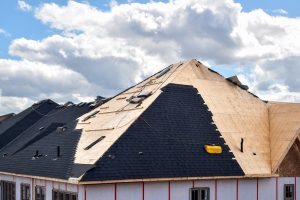 Gable end walls are among the most common failure points. These triangular sections experience intense wind pressure, both inward push and outward pull, during a hurricane. When they collapse, they drag the surrounding roof structure with them. FEMA’s Hurricane and Flood Mitigation Handbook identifies gable ends taller than four feet as high-risk and recommends installing horizontal bracing to transfer wind loads safely.
Ridge vents and soffit vents are another frequent weak spot. Standard ridge vents can tear off completely in high winds, creating an opening for water and allowing wind to pressurize the attic from below. That attic pressure, combined with negative pressure on the downwind side, generates enough uplift force to peel entire roof sections off the structure.
Roof flashing around chimneys, skylights, and valleys is also highly vulnerable when it is not properly sealed or secured. Once flashing fails, water infiltration follows immediately. Professional weatherproofing services specifically address these entry points before storm season.
The material you choose sets the ceiling on how well your roof will perform in extreme weather.
Metal roofing is the gold standard for hurricane-prone areas. According to the Metal Roofing Alliance, metal roofs carry a standard wind rating of 140 mph, with some premium systems engineered to exceed that threshold.
Standing seam panels also interlock to prevent water infiltration even in intense storm conditions. Metal is fire-resistant and can last 40 to 70 years with proper maintenance. Explore available metal roofing options specifically selected for Gulf Coast conditions.
Impact-resistant asphalt shingles are a more budget-friendly option that still provides serious storm protection. UL 2218 Class 4 is the highest impact resistance rating available for asphalt shingles, earned by withstanding a 2-inch steel ball dropped from 20 feet without cracking or tearing.
Wind resistance is a separate rating—many Class 4 shingles also carry wind ratings of up to 130 mph. Brands like GAF Timberline ArmorShield II, Owens Corning Duration Storm, and CertainTeed Landmark IR are built with polymer-modified asphalt specifically for hurricane zones.
Slate roofing offers exceptional durability, with resistance to wind speeds up to 110 mph and a lifespan exceeding 100 years when properly installed. It is a premium option that works well for homeowners who want the strongest possible roof and are prepared for the higher upfront investment.
The worst choice for storm zones? Standard 3-tab asphalt shingles. They are not engineered for high-wind performance and have no business being installed on a New Orleans home.
Your roof is only as strong as what connects it to your walls.
Hurricane straps and clips are metal connectors that fasten roof rafters and trusses directly to the wall framing below. Without them, the roof sits loosely on top of the structure, held in place mostly by gravity and standard nailing. With hurricane straps properly installed, the connection can resist the uplift forces generated by winds exceeding 100 mph.
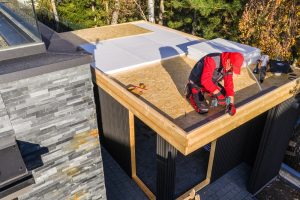 FEMA’s P-2181 guidelines recommend ring-shank nails over smooth-shank nails for roof sheathing. The International Residential Code requires a minimum of six nails per shingle rather than the standard four in high-wind zones above 110 mph. These small installation details dramatically improve the roof’s ability to stay in place during a major storm.
The Louisiana Fortify Homes Program currently offers grants of up to $10,000 to help homeowners upgrade to FORTIFIED-standard roofs, which include sealed roof sheathing, reinforced edge protection, and additional fastening patterns. According to a Louisiana legislative audit report, the state had issued 5,413 FORTIFIED certificates as of February 2025, with 1,838 of those funded directly by the state grant program.
If your home was built before 2002, there is a strong chance it does not have hurricane straps. Scheduling a professional roof inspection is the only way to know for certain what your current connections can handle.
You do not need to wait for a named storm to start protecting your home. Here are the most impactful actions you can take today.
A trained roofer can identify cracked flashing, loose shingles, deteriorated sealant, and structural weaknesses that are invisible from the ground. Roofing industry standards and FEMA guidance recommend inspections at least twice per year, in spring and fall, plus immediately after any major wind event. A thorough roof inspection gives you a clear picture of your home’s current storm readiness.
Branches that hang over your roof are projectiles during a storm. A single large limb can punch through shingles, crack decking, and create a water entry point that causes thousands of dollars in interior damage.
Every pipe, vent, and skylight that passes through your roof deck is a potential failure point. Make sure all penetrations are properly flashed and sealed with a roofing sealant rated for high-wind conditions.
Self-adhering synthetic underlayment acts as a secondary water barrier. If shingles blow off during a storm, underlayment gives your roof deck critical additional protection against water intrusion.
If your roof is more than 15 years old, its next replacement is the ideal time to move up to Class 4 impact-resistant shingles or metal roofing. The upgrade cost is minor compared to what storm damage repairs can run.
If a storm has already hit, do not wait. An emergency roofing team can respond fast and protect your home from further damage.
Yes, and often significantly. Here is what Louisiana homeowners should know:
 Premium discounts: Many insurers offer reduced premiums for homes with impact-resistant roofing or a FORTIFIED-standard certification. Discounts vary by carrier but can offset a meaningful portion of your upgrade costs over time.
The team at Big Easy Roofers has been protecting homes across the Greater New Orleans area for over 30 years. Storm season in New Orleans is not a matter of if. It is a matter of when—and the time to prepare is before a storm is in the Gulf, not after.
Whether you need a pre-season inspection, a full storm-resistant replacement, or emergency response after a hit, we are ready. Our team moves fast, our estimates are free, and our work is backed by a workmanship warranty. Call us at 504-285-5135 for a FREE estimate.
Schedule a professional roof inspection. A qualified roofer will check your shingles, flashing, fasteners, underlayment, and structural connections to identify any vulnerabilities before storm season hits.
Metal roofing is the top choice, carrying a standard wind rating of 140 mph per the Metal Roofing Alliance. Class 4 impact-resistant asphalt shingles are a strong budget-friendly alternative, with wind ratings up to 130 mph.
A properly built roof in New Orleans should handle winds of at least 130 mph. Metal roofs are rated to 140 mph, and FORTIFIED-certified roofs are designed to withstand winds up to 150 mph.
Yes. Hurricane straps anchor your roof framing directly to your wall structure, preventing uplift during high winds. Homes built before 2002 often lack them, as modern building codes requiring hurricane straps were not enacted until after Hurricane Andrew.
At least twice a year — once in spring before hurricane season and once in fall. You should also schedule an inspection after any major wind or hail event, even if no damage is visible from the ground.
In most cases, yes, if the damage resulted from a covered storm event. Louisiana homeowners with FORTIFIED-certified or impact-resistant roofs may also qualify for insurance premium discounts.
It is a state grant program offering up to $10,000 to help homeowners upgrade to a FORTIFIED-certified roof. Grants are awarded by lottery approximately twice a year. Visit ldi.la.gov/fortifyhomes to register during an open window.


 By Admin
  0 Comment
  Mar 11, 2026