
Roofing underlayment sits between the shingles and the roof deck, and most homeowners never think about it until something goes wrong. In Slidell, where Lake Pontchartrain humidity and St. Tammany Parish storm exposure put roofs under year-round pressure, the type of underlayment your contractor installs makes a real difference in how long your roof holds up. Big Easy Roofers works with Slidell homeowners to match the right underlayment to their roof type, budget, and the specific weather conditions on the Northshore.
Think of underlayment as the backup plan beneath your shingles. Shingles are the first line of defense against rain, wind, and UV exposure, but they are not watertight on their own. Water can wick under shingle edges during heavy rain, wind can drive moisture beneath lifted tabs, and condensation forms on the underside of roofing materials during temperature swings.
Underlayment catches that moisture before it reaches the plywood or OSB decking underneath. Without it, even a small amount of water reaching the deck repeatedly will cause rot, mold growth, and structural weakening. In a place like Slidell, where afternoon thunderstorms drop heavy rain several times a week during summer, that backup layer is doing real work.
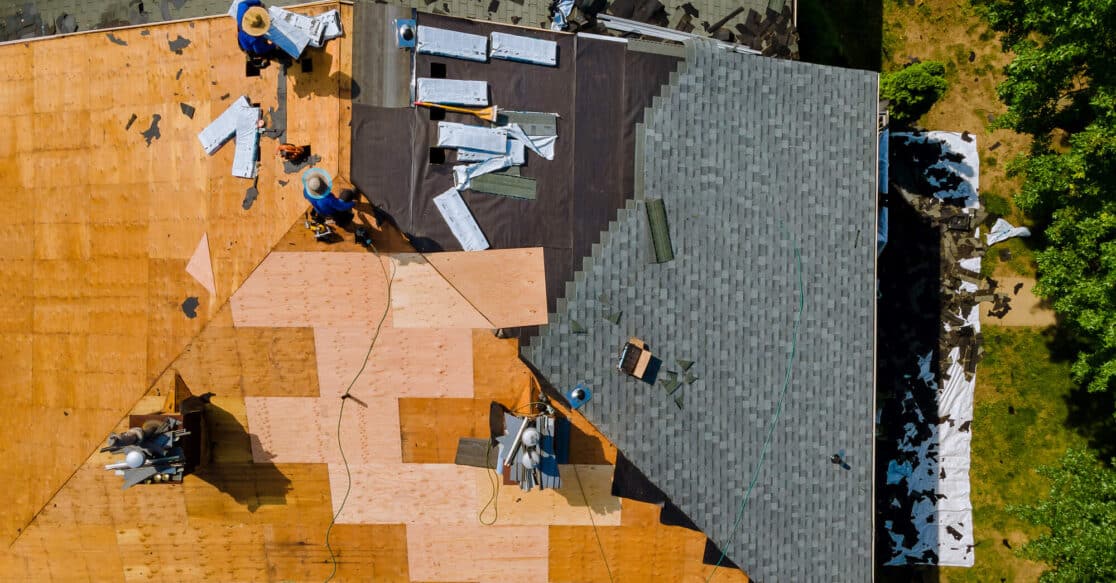
Underlayment also protects the deck during installation. Between the time old shingles come off and new ones go on, the deck is exposed. A sudden storm during a re-roof without underlayment in place can soak the decking and everything below it.
Felt underlayment, sometimes called tar paper, has been used on roofs for over a century. It comes in two weights: 15-pound and 30-pound. The numbers refer to the weight per square (100 square feet), with 30-pound felt being thicker and more durable.
Felt works by absorbing small amounts of water and then releasing that moisture as it dries. This breathability is an advantage in some climates, but in Slidell, where humidity regularly exceeds 80 percent from May through October, felt can stay damp for extended periods. Prolonged moisture exposure causes felt to wrinkle, buckle, and eventually break down, which can telegraph through the shingles above and create visible ridges on the roof surface.
On the cost side, felt is the least expensive option. A roll of 30-pound felt covers about two squares and costs significantly less than synthetic alternatives. For tight budgets or secondary structures like detached garages and sheds, felt can still be a reasonable choice when paired with proper ventilation.
The drawbacks show up most clearly in Slidell conditions. Felt tears more easily during installation, especially in windy weather. It becomes slippery when wet, creating a safety hazard for installers. And if a re-roof project gets delayed by rain, exposed felt deteriorates quickly, sometimes within just a few days of direct sun and moisture exposure.
Synthetic underlayment is made from woven or spun polypropylene or polyethylene. It does not absorb water at all, which is the main reason Slidell contractors have shifted toward it over the past decade.
Because synthetic underlayment repels moisture rather than absorbing it, it stays flat against the deck regardless of humidity levels. It will not wrinkle, buckle, or rot. UV resistance is built into the material, so it can sit exposed on a deck for weeks or even months during a staged installation without breaking down. Most manufacturers warrant their synthetic products for up to six months of UV exposure before shingles need to go on top.
Synthetic is lighter than felt, covers more area per roll, and provides better traction for installers walking on it during hot, humid days. It also resists tearing, which matters when crews are working quickly to beat afternoon thunderstorms rolling in off the lake.
The cost is higher than felt, typically two to three times more per square. But the labor savings from easier handling and the reduced risk of needing to replace damaged underlayment before shingling often offset that difference. For new roof installation projects in Slidell, synthetic underlayment has become the standard recommendation from most reputable contractors.
Ice and water shield is a self-adhering membrane with a rubberized asphalt backing. Unlike felt or synthetic, which are mechanically fastened with staples or cap nails, ice and water shield sticks directly to the deck and seals around any fastener that penetrates it. This creates a watertight bond that standard underlayment cannot match.
The name is somewhat misleading for Louisiana homeowners. Ice dams are extremely rare in Slidell, but wind-driven rain is a constant threat. During tropical storms and hurricanes, rain does not fall straight down. It moves horizontally, pushing under shingle edges, around flashing, and into every gap it can find. Ice and water shield applied at eaves, valleys, around skylights, and along rake edges creates a sealed barrier at these high-risk areas.
St. Tammany Parish falls within a high-wind zone under the Louisiana State Uniform Construction Code. The code requires ice and water shield at eaves in areas prone to wind-driven rain, which includes all of Slidell, Pearl River, and the surrounding Northshore communities. Valleys, where two roof planes meet and channel large volumes of water, are another area where self-adhering membrane is strongly recommended even beyond code minimums.
Full-deck application of ice and water shield, covering the entire roof deck rather than just vulnerable areas, offers maximum protection. The cost is substantially higher, but for homeowners in flood zones or areas with heavy tree cover who have experienced repeated leak issues, the investment can eliminate chronic water intrusion problems.
Slidell sits between Lake Pontchartrain to the south and the Pearl River basin to the north. This geography creates a microclimate with higher humidity and more frequent afternoon thunderstorms than areas farther inland. During summer, morning fog from the lake gives way to heat buildup that triggers convective storms by early afternoon, dropping heavy rain in short bursts.
These rapid wet-dry cycles stress roofing materials differently than steady, all-day rain. Water hits the roof hard, drains partially, and then the sun heats the surface to well over 150 degrees Fahrenheit. Underlayment that absorbs water and dries slowly, like felt, goes through repeated expansion and contraction cycles that accelerate deterioration.
Salt air is another factor that gets overlooked. Homes near the lakefront in Eden Isles, Lakeshore Estates, and along Highway 11 are exposed to salt-laden moisture that corrodes metal fasteners. When staples holding felt underlayment corrode, the felt loosens and can shift under the shingles. Synthetic underlayment fastened with corrosion-resistant cap nails holds up much better in these areas.
Hurricane preparedness also factors into the decision. Slidell took direct hits from Katrina in 2005 and Ida in 2021, with widespread roof damage both times. Homes that had ice and water shield at eaves and valleys generally fared better than those with felt alone, because the sealed membrane prevented water intrusion even after shingles were stripped away by wind.
St. Tammany Parish enforces the Louisiana State Uniform Construction Code, which follows the International Residential Code (IRC) with state amendments for wind and moisture exposure. Roofing permits are required for full re-roofs and must be obtained through the parish permits office before work begins.
Key underlayment requirements for the Slidell area include a minimum of one layer of underlayment on all sloped roofs. For roofs with slopes between 2:12 and 4:12 (low slope), two layers of underlayment or a single layer of self-adhering membrane is required. Ice and water shield is mandated at eaves in high-wind zones, which covers all of St. Tammany Parish. Wind-rated shingles with a minimum classification of D or H are required and must be installed over compatible underlayment per manufacturer specifications.
Contractors must pull a permit, and inspections are performed before and after roofing work. Using an underlayment that does not meet code can result in a failed inspection, requiring the contractor to tear off and redo the work. This is one reason to verify that your roofing contractor is familiar with St. Tammany Parish requirements specifically, rather than applying New Orleans or Baton Rouge standards that may differ in detail.
The best underlayment for your Slidell home depends on roof slope, budget, and how long you plan to stay in the house. For steep-slope roofs (6:12 and above) on a moderate budget, synthetic underlayment with ice and water shield at eaves and valleys is the most common setup local contractors recommend.
Low-slope sections, dormers, and areas with complex geometry where water channels and pools benefit from broader ice and water shield coverage. If your home has experienced leaks in the past, tracing those leak locations and applying self-adhering membrane at those specific spots can solve persistent problems.
For homes within a quarter mile of Lake Pontchartrain, upgraded corrosion-resistant fasteners and synthetic underlayment should be considered minimum standards rather than upgrades. The combination of salt air and high humidity will compromise felt and standard steel staples within a few years.
Talk to your contractor about the shingle manufacturer’s warranty requirements as well. Many manufacturers require specific underlayment types to honor their warranty. Installing the wrong underlayment can void coverage on an otherwise well-installed roof. Contact Big Easy Roofers to discuss which underlayment system makes sense for your home and your budget.


 By Admin
  0 Comment
  Sep 11, 2025