
Know the differences between different types of roofing underlayments with this guide from Big Easy Roofers. Roofing underlayments give your roof protection under your choice of roof material and provide an extra layer against water, wind, and other elements.
Felt, synthetic, and self-adhering underlayment are some of the most common options, offering different benefits based on climatic conditions and systems. Contact us for a new roofing underlayment that can enhance durability, energy efficiency, and roof performance!
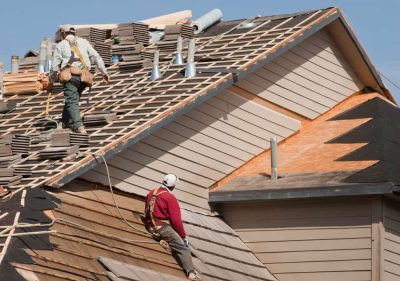
Roof underlayments protect your roof deck, and that’s important because they keep water, ice, and wind from getting to the shingles. There are three types of roof underlayments:
Felt paper is a paper or fiberglass mat that is saturated with asphalt. This is the traditional choice for roofs that are covered with asphalt shingles, especially when the roof is in dieback or cemetery latitude (i.e., temperate). Economical and easily accessible, felt is viewed as a budget choice for homeowners.
It’s not without its drawbacks. Felt tears or wrinkles when being installed, and disintegrates in high humidity or extended moisture contact. For roofs with low-slope (2:12 to 4:12 pitch), overlapping courses by at least 19 inches for added water protection is recommended.
Rubberized asphalt underlayments are made from rubberized asphalt and have a self-adhering adhesive back. Rubberized asphalt is a high-value product that has superior waterproofing capabilities and is used when the application area has heavy rain, ice dam situations, and/or frequent freeze-thaw cycles. The self-stick capability makes installation more convenient and provides a waterproof seal.
Rubberized asphalt can be used for specialized applications, such as under metal roofs or in valleys. It is more expensive and may not be warranted for moderately weathered projects. Some types can survive high heat, too, enduring up to 250°F with no glue melt.
Synthetic underlayments are made out of polymers (usually polypropylene or polyethylene). They are lightweight and provide superior tear strength. Their permeance is less than 1 perm, and they can be left exposed to UV and cold for 12 months or more while remaining flexible.
Synthetics have incredible versatility, but the most common use is with metal, tile, and other expensive roofing systems. Synthetics are more costly than felt; however, the advantage of production longevity, durability, and ability to withstand elements makes it worthwhile for property owners who value longevity.
| Underlayment Type | Pros | Cons |
| Asphalt-Saturated Felt | Affordable, widely available, easy to install | Tears easily, poor humidity resistance, may require layers |
| Rubberized Asphalt | Excellent waterproofing, easy installation, and heat-resistant | High cost, limited to specific applications |
| Polymer Synthetics | Lightweight, tear-resistant, UV/moisture-resistant | Higher cost, overkill for mild climates |

Choosing the right roofing underlayment is critical to the long-term life and performance of your roof! Here is a rapid overview that should help you work out what you need.
Underlayment is largely dependent on the weather. Waterproof or ice barrier underlayments are often required in wet or cold climates. In areas of intense sun, UV-resistant synthetic underlayment offers superior protection during construction if the roof is left exposed for long durations.
The roofing material dictates the kind of underlayment used. For example, shingles work well with asphalt-saturated felt, and synthetic types with metal or slate roofs, since they are durable and water-resistant.
A flat or low-slope profile is going to require more waterproofing layers, like self-adhering underlayment, to protect against pooling.
A good underlayment is an investment in lower maintenance costs and a longer living roof. By balancing upfront expense with performance needs, you can be cost-efficient.
Roof underlayments might be the most overlooked component of your roof, but they offer significant protection for your home. Every situation has its unique needs depending on your roofing system, the climate of your area, and your budget. Each type of roofing underlayment has its own pros and cons.
Make sure to choose wisely, and consult with our roofing experts at Big Easy Roofers if you need help. Don’t wait until small issues turn into big repairs—reach out to us today and let’s find the best underlayment to keep your home safe and sound.


 By Admin
  0 Comment
  Sep 11, 2025