
Flashing on a roof would seal and protect such areas as chimneys, vents, valleys, and other susceptible areas with specialized long-lasting materials like aluminum or galvanized steel to prevent penetration of water. When installed properly, it will serve as a waterproof barrier that will minimize probable leaks and damage to the building.
By showing how important it is, we demonstrate Premium Flashing’s ability to save households and businesses from expensive problems. If you want peace of mind about your roof’s protection, reach out to us at Big Easy Roofers. Let’s make sure your home or business stays safe, dry, and worry-free.

Roof flashing is a thin waterproof material that directs water away from vulnerable areas on a roof, such as joints, edges, chimneys, vents, skylights, and valleys. Without it, these spots are prone to leaks, water damage, and costly repairs.
Flashing is vital for both simple and complex roof designs because it forms a watertight barrier that protects the structure below. It extends the roof’s lifespan by preventing moisture buildup that can lead to rot, mold, and structural issues. Made from durable materials like galvanized steel, aluminum, copper, rubber, or plastic, flashing is built to withstand the elements while adapting to different roof styles and pitches.
There are many different types of roof flashing, all serving a specific function in keeping your roof free from leaks. The correct type and application of these flashings are one of the major contributors to a lasting and leak-free roof system.
Base flashing is used where movement occurs, such as around chimneys. This two-piece system allows roof materials to expand and contract while providing a waterproof seal around vertical structures. It often pairs with counter flashing for added protection.
Step flashing consists of rectangular pieces bent at 90 degrees, overlapping to divert water at roof-wall intersections. It works with shingles to create a moisture-proof transition on pitched roofs, effectively preventing leaks in vulnerable areas.
Chimney flashing, made with durable materials like copper or galvanized steel counter flashing, seals the gap where the chimney and roof meet and keeps water out.
Metal flashing, called drip edge, serves the purpose of directing water from the edges of the roof gutters and helps protect fascia boards while prolonging a roof covering’s lifespan.
Valley flashing is installed where two roof planes meet, guiding rainwater to gutters and reducing pooling that can cause leaks. It’s especially useful for complex roof designs.
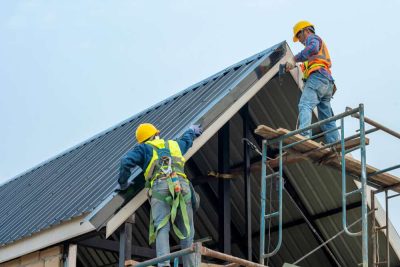
Roof flashing is a critical aspect of roofing to direct water away from areas like joints, seams, or where materials meet. If carefully planned and prepared using the right type of materials and techniques, this could give you a watertight seal that might last you for years.
The first step is to clean the roof surface, ensuring it is free from debris and any old sealant that could hinder the preparation process. Then check for damages to ensure a smooth installation. Cut flashing pieces with 2-4 inch overlaps to prevent leaks, and ensure they are precise for accurate measuring.
Install the flashing pieces before nailing them down, making sure they match the last roof covering. Nail only two nails per piece to minimize perforations. Overlapping 2-4 inches following the roof slope, sealing wrapping edges in roofing cement or sealant; for step flashing, bend it around corners, extending it 8 inches or more above shingles.
Essential tools include tin snips, roofing nails, a hammer, and a caulk gun. Use high-quality materials like galvanized steel, aluminum, or copper, and wear safety gear such as gloves, goggles, and non-slip boots. Specialized bending tools may also be helpful.
Always use PPE and good ladders. Avoid installation in dry or windy conditions, and follow the manufacturer’s usage instructions for flashing materials.
If you’re looking for the best example of what roof flashing does, you’ve come to the right place. It can be defined as the activity undertaken to provide a watertight covering at any building intersection or a projection, for example, between a chimney and a roof or between a wall and a roof.
Turn water away from roof-wall junctions and other converging locations with flashing. Without flashing, rainwater can seep through cracks, resulting in busted spots and eventually leaks and moisture build-up around chimneys and dormers. A properly placed flashing prevents the entry of water, which protects ceilings, walls, insulation, and prevents expensive mold and rot damage.
According to the building code provision, flashing is a standard requirement, commonly made with strong constituents such as 26-gauge galvanized steel.
Flashing protects a roof against water, UV rays, wind, and heavy downpours to maintain the roof’s durability and aesthetic beauty. The roofing materials, therefore, expand and contract during temperature variations; thus, the flashings are usually the two-part types for long-term protection in all kinds of weather.
Damage is likely to occur to roofs, walls, and foundations, mostly due to water incursion. Flashing helps prevent this very intrusion and directs the water away from the structural considerations above, maintaining the whole structural integrity of the roof.
Needless to say, roof flashing is a necessity when it comes to keeping out seasonal changes, with respect to water between the roof and its vulnerable points, and extending its life. It also needs proper and quality materials during installation to effectively do its job.
Proper flashing is required for the safety and durability of both home and commercial structures. In case you have something wrong with your roof or you need an inspection, do not hesitate to come to us today at Big Easy Roofers! We are here to help protect what matters the most: your home or business.


 By Admin
  0 Comment
  Sep 11, 2025