
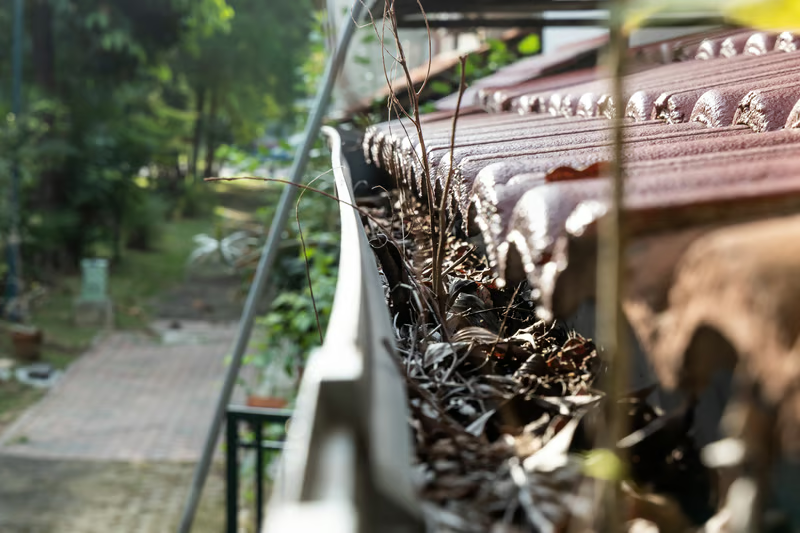
New Orleans receives over 64 inches of rain each year, making it one of the wettest cities in the United States. That volume of water puts enormous pressure on your gutter system, and when gutters fail, your roof pays the price. At Big Easy Roofers, we see gutter-related roof damage in homes across the metro area that could have been prevented with routine attention.
When gutters clog with leaves, live oak debris, and sediment, water has nowhere to go. Instead of flowing through downspouts and away from your home, it pools along the roofline and backs up under shingles. This standing water saturates the roof decking, softens the wood, and creates an entry point for moisture that leads to rot, mold growth, and structural weakening.

In New Orleans, where afternoon thunderstorms can drop two inches of rain in under an hour, a single clogged gutter run can send hundreds of gallons cascading over the edge. That overflow erodes landscaping, saturates foundation soil, and creates the kind of persistent dampness that attracts Formosan termites, a species that causes more structural damage in Louisiana than anywhere else in the country.
The fascia boards directly behind your gutters absorb the brunt of this moisture. Once fascia rots, gutter brackets lose their anchor points and the entire system begins to sag, compounding the drainage failure. If you notice any of these issues, a get a roof and gutter inspection in New Orleans can identify damage before it spreads.
Many homeowners miss the connection between gutter problems and roof deterioration. Watch for these warning signs:
Standard 5-inch K-style gutters were designed for regions with moderate rainfall. New Orleans averages 64 inches of rain annually, roughly double the national average, with intense tropical downpours that can overwhelm undersized systems in minutes.

For most homes in the metro area, 6-inch gutters paired with 3×4-inch rectangular downspouts provide the capacity needed to handle Louisiana’s peak rainfall rates. Homes with steep roof pitches or large roof surface areas may need even larger downspouts or additional outlet points to prevent overflow during heavy storms.
Proper gutter sizing is especially critical in neighborhoods acr


 By Admin
 0 Comment
 Jul 2, 2026